

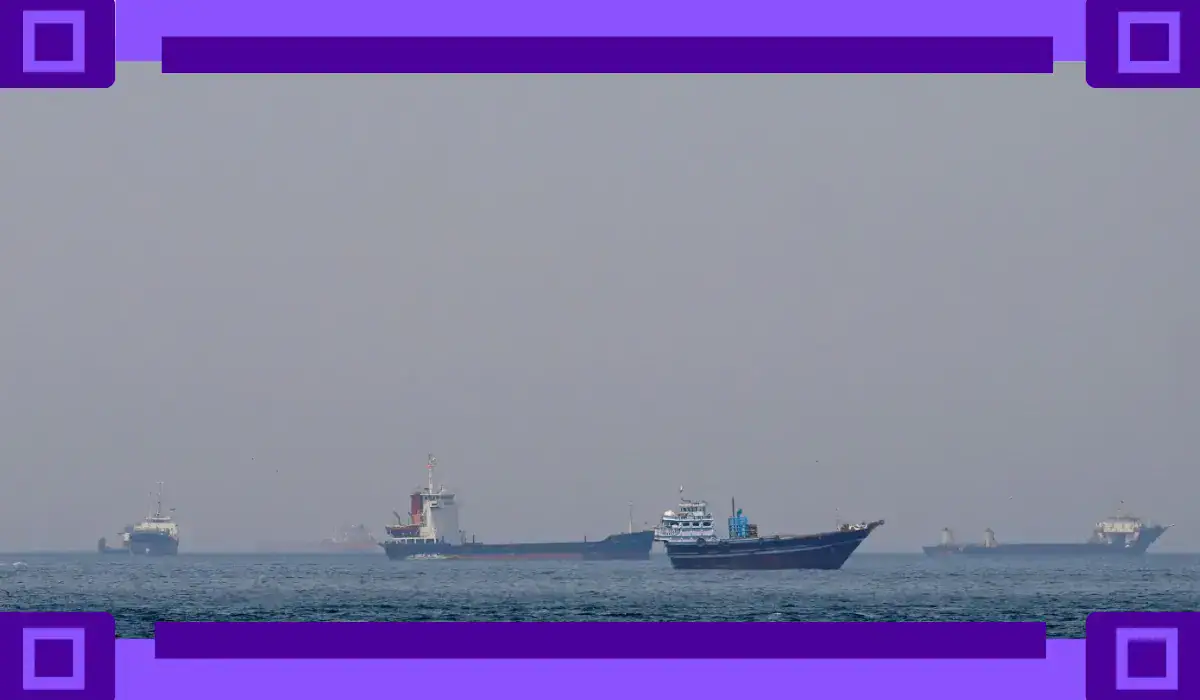
The ongoing Strait of Hormuz crisis has not only intensified geopolitical and maritime tensions but has also opened the door for sophisticated cyber-enabled fraud operations. A new wave of deception involving cryptocurrency payments has emerged, where scammers impersonate official authorities and exploit shipping chaos to extract fake “transit fees” from vulnerable vessels operating in one of the world’s most critical maritime chokepoints.
What initially appears to be a financial scam has had far more dangerous consequences at sea, including miscommunication between ships and military forces, leading to armed confrontations and escalating risks for global trade routes.
How the Crypto Scam Exploits Maritime Chaos
The Strait of Hormuz is one of the busiest and most strategically sensitive waterways in the world, handling a significant share of global oil and liquefied natural gas shipments. Amid rising military activity and restricted passage conditions, many vessels have been left stranded or forced to navigate complex clearance procedures.
According to maritime risk advisories, scammers have been sending highly convincing messages to shipping operators, posing as Iranian security or port authorities. These messages claim that vessels must pay a “clearance fee” in cryptocurrency, typically Bitcoin or USDT to obtain permission for safe passage.
These fraudulent communications are designed to mimic legitimate instructions, often including formal language about documentation checks, eligibility approval, and scheduled transit windows. This makes them especially dangerous in a region where real authorities have also experimented with digital payment systems for transit-related charges.
However, security experts have confirmed that these payment requests are entirely fake. Despite this, the confusion created by overlapping real and fake instructions has caused at least one vessel to mistakenly engage with scammers before attempting to proceed through restricted waters, where it was later fired upon during transit attempts, highlighting how financial fraud can escalate into real-world maritime incidents.
Strait of Hormuz Crisis and the Perfect Environment for Fraud
The Strait of Hormuz crisis has created a uniquely unstable environment where misinformation spreads quickly and operational decisions are made under pressure. Thousands of vessels and crews have been stuck in limbo due to shifting blockades, inspections, and military restrictions.
This uncertainty has allowed scammers to thrive. They exploit three key vulnerabilities:
First, shipping companies are under extreme pressure to resume movement due to high cargo values and rising insurance costs. This urgency reduces scrutiny of payment requests.
Second, legitimate discussions around tolls and transit fees in the region make fake cryptocurrency demands appear credible. Since real authorities have previously explored non-traditional payment methods, the scammers’ messages blend easily into existing expectations.
Third, communication disruptions and the fog of conflict make it difficult for operators to verify instructions in real time. This delay creates a critical window for fraudsters to intervene before official confirmation can be obtained.
The result is a dangerous overlap between cyber fraud and physical maritime security threats, where a financial scam can indirectly contribute to real-world escalation at sea.
From Digital Fraud to Real-World Maritime Danger
What makes this situation particularly alarming is that the scam does not remain confined to financial loss. In the Strait of Hormuz, misinformation can have immediate physical consequences.
Reports indicate that at least one vessel that may have received fraudulent clearance instructions attempted to proceed through the strait without valid authorization. During this attempt, it came under fire from Iranian forces operating in the region. Although the exact chain of events remains under investigation, the overlap between fake payment schemes and military engagement has raised serious concerns among maritime security analysts.
This demonstrates how digital deception can amplify existing geopolitical risks. In highly sensitive waters like the Strait of Hormuz, even minor miscommunication can be interpreted as hostile intent. When combined with fake authorization codes or fraudulent payment confirmations, the risk of escalation increases dramatically.
The situation has prompted shipping authorities to issue urgent warnings, advising operators to verify all transit instructions through verified channels and avoid any cryptocurrency-based payment requests that are not officially confirmed.
Why Cryptocurrency Is Central to These Scams
Cryptocurrency plays a key role in the effectiveness of these fraudulent schemes. Unlike traditional banking systems, crypto transactions are fast, irreversible, and difficult to trace once transferred through multiple wallets or mixers.
Scammers exploit this by demanding payments in Bitcoin or stablecoins such as USDT, claiming it is the only acceptable method for urgent clearance. The perception of crypto as a “neutral” and borderless financial tool makes it especially attractive in high-risk international zones.
However, this same feature makes recovery of funds nearly impossible once sent. Security experts also warn that the scale of maritime transactions often involving multimillion-dollar cargoes makes shipping companies prime targets for high-value fraud attempts.
Impact on Global Shipping and Energy Markets
The broader impact of the Strait of Hormuz crisis combined with these scams extends beyond individual vessels. The strait is a critical artery for global energy supply, and any disruption affects oil prices, insurance premiums, and shipping routes worldwide.
Even temporary delays or miscommunication incidents can trigger ripple effects across global markets. Insurance providers have already increased war-risk premiums, while shipping firms are rerouting vessels to avoid the region where possible.
The introduction of crypto-based fraud adds another layer of instability, forcing companies to adopt stricter verification protocols and slowing down already delayed maritime operations.
Strengthening Maritime Cyber and Operational Security
In response to these developments, maritime security firms and international agencies are urging tighter coordination between naval forces, shipping operators, and cybersecurity teams. Verification protocols for transit permissions are being reinforced, with a strong emphasis on rejecting any unofficial cryptocurrency payment requests.
Shipping companies are also being encouraged to train crews and administrative teams to recognize impersonation attempts, especially those involving urgent financial demands or unusually structured “clearance” messages.
The incident underscores a broader trend in modern conflict zones: cybercrime and physical warfare are increasingly interconnected, and threats no longer exist in isolation.
Conclusion
The emergence of cryptocurrency-based fraud in the Strait of Hormuz highlights how quickly digital scams can escalate into real-world geopolitical risks. By exploiting confusion during the Strait of Hormuz crisis, scammers have managed to insert themselves into an already volatile maritime environment, creating dangerous overlaps between financial deception and military operations.
As global shipping continues to navigate this uncertain region, the need for robust verification systems, cyber awareness, and coordinated international response has never been greater. Without these safeguards, the line between scam-driven disruption and physical conflict may continue to blur, threatening both global trade stability and maritime safety.
Also Read: Bitcoin Mining Giant Energizes 11,298 ASICs in Major Canada Expansion